The desired outcome of SETI is an effective institutional, regulatory, and financial ecosystem that demonstrates the Indonesian embarkment towards a sustainable energy transition. The project will promote pilots, demonstration, and innovation in industry and on municipal level as well its replicability to benefit all energy users.
-
Scaling up the partnership between PT SMI and AFD, this grant support from EU’s Asian Investment Facility (EU-AIF) is the grant mobilization through PT SMI to support several main objectives as: (1) increasing the sharing of PT SMI’s financing portfolio (2) supporting the transition of PT SMI from an infrastructure company to a Development Finance Institution (DFI) (3) contribute to the achievement of SDG objective in Indonesia and (4) disseminate technical know-how and good practices in PT SMI through Technical Assistance (in particular on the credit risk process for SDG project, and de-risking activity).
The project “Support for Infrastructure Investments in Indonesia (S4I)” supports the institutional, technical as well as project preparation capacities of Perseroan Terbatas Sarana Multi Infrastruktur (Persero) (PT SMI). S4I comprises the following four components: I) Support to Environmental and Social Safeguards Systems (ESS); II) Technical in-house expertise; III) Consulting on procedural reforms and IV) Project Development Facility (PDF).
The ExploRE project is implemented based on the fundamentals of the renewable energy deployment strategy of the Promotion of Least-cost Renewables in Indonesia (LCOREINDO) Project, which is the predecessor project of ExploRE. Hence, by utilizing the lessons learnt from LCORE-INDO and implementing ExploRE's novel measures i.e., innovative pilot projects, capacity building, stakeholder engagement, action plan, and operational tools for policy making, the project starts at four different output levels, namely (1) RE Deployment Strategy, (2) Political Instruments and Financial Environment, (3) Institution Building, and (4) Innovation.
The grant will be used to fund the expert services required to assess the geothermal resources for the Candi Umbul Telomoyo Geothermal Power Project. This includes the preparation of exploratory drilling, analysis and evaluation of existing studies and documents, mobilization on site, actual drilling, Carrying out an ESIA, documentation and evaluation of the results.
This grant wants to help PT. PLN in building capacity and a pipeline to handle the number of projects necessary to meet Indonesia’s JETP-goals. By the grant there will be studies produced as one part of the module and there will be support and training measures offered to enable PT. PLN to close the gap between the project idea and the project that can be financed in the short term and to prepare climate-relevant infrastructure projects more quickly. By doing so, PT. PLN will be able to generate a pipeline of financeable projects.
ENTRI (Renewable Energy Mini Grids for South-South Triangular Cooperation) takes up the long German supports to Indonesia in decentralized energy and south-south triangular topics. The key idea of this project is maximizing experiences and knowledge available in Indonesia to support other regions that are currently in the process of increasing energy access for their people and at the same time supporting the achievement of global climate goals.
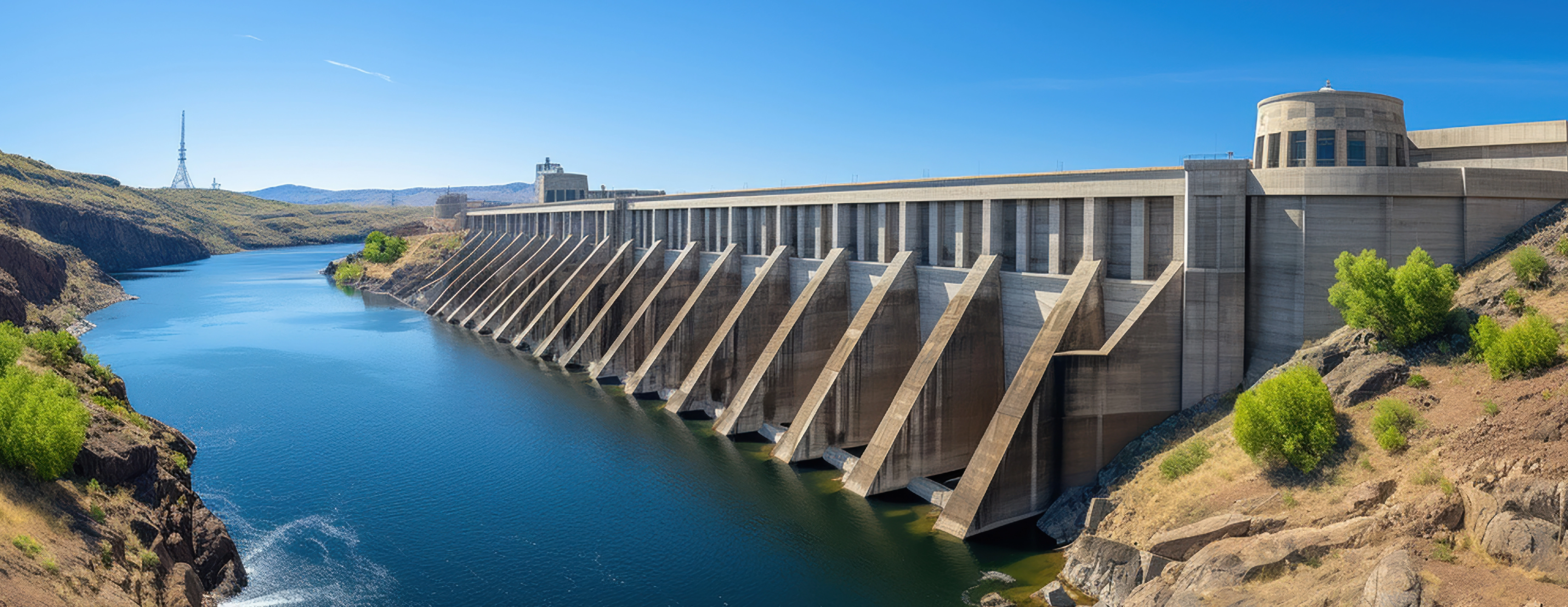
PLN employees are trained in all areas necessary for the planning and operation of hydropower plants. This serves the targeted personnel, technical and structural development of PLN. It is assumed that the complementary measure will make a broadly effective contribution to the expansion of renewable energies. Concrete results for newly planned hydropower plants include sustainable operational planning, the application of occupational safety concepts and methods for the development, implementation and operation of hydropower plants in accordance with international standards.
The 1,000 Islands-Renewable Energy for Electrification Programme Phase II (REEP2) is a project that focuses on renewable energy grid integration, which aim to improve the institutional, regulatory, and technical conditions for achieving the policy target of 23% of RE by 2025 at national and regional level. The project is implemented by Directorate General for New Renewable Energy and Energy Conservation (DG-NREEC) on behalf of Government of Indonesia and Deutsche Gesellschaft für Internationale Zusammenarbeit (GIZ) on behalf of German Federal Ministry for Economic Cooperation and Development (BMZ).
The project Clean, Affordable, and Secure Energy for Southeast Asia (CASE) aims to drive change in the Southeast Asian power sector towards an increased ambition for climate change mitigation. The programme focuses on the four largest countries of the region in terms of population: Indonesia, Vietnam, Thailand, and the Philippines which represent nearly threequarters of total power generation in Southeast Asia, and account for about 72% of the region’s GDP and 82% of its population.
The project addresses regulatory, capacity, and financing gaps that prevent large-scale adoption of low-carbon buildings (LCB). Project interventions build technical and institutional capacity for city and state governments to contribute to national GHG emission reduction targets from building materials and operations, particularly from cooling; complementing regional and global initiatives.
Showing 25 to 36 of 50 results
.webp)
.webp)
[1].webp)
[1].webp)
.webp)